supertrains
A long-running mobile train simulation and action game combining physics, customization, realtime systems, and expansive interactive environments.
Project Overview
SuperTrains is a long-running train simulation and action game developed independently across multiple generations of mobile and desktop platforms.
Originally released as a premium/freemium title and later transitioned into a free-to-play model with in-app purchases, the game evolved continuously over many years through gameplay expansions, technical overhauls, visual redesigns, and platform adaptations.
The project achieved approximately 5 million official downloads across iOS, macOS, Google Play, tvOS and additional platforms.
As sole developer, I was responsible for all aspects of production including gameplay programming, technical systems, UI/UX, level design, optimization, visual direction, monetization systems, platform deployment, and long-term live product maintenance.
The game combines train simulation, physics-based interactions, environmental exploration, mission gameplay, customization systems, and large-scale interactive environments designed for accessible but engaging gameplay across mobile devices.
Throughout development, I also explored experimental multiplayer and VR adaptations of the project, including Oculus Rift prototypes, investigating how the game’s simulation systems and environments could translate into immersive and shared realtime experiences.
Gameplay & Design
SuperTrains combines arcade train simulation, physics-driven gameplay, combat systems, customization mechanics, and large-scale interactive track environments into an accessible but mechanically layered mobile experience.
The core gameplay loop revolves around navigating increasingly complex rail networks while collecting wagons, engaging enemy trains, avoiding hazards, and upgrading locomotive capabilities. Levels were designed to gradually introduce new gameplay concepts, environmental challenges, track configurations, and strategic decision-making without overwhelming players.
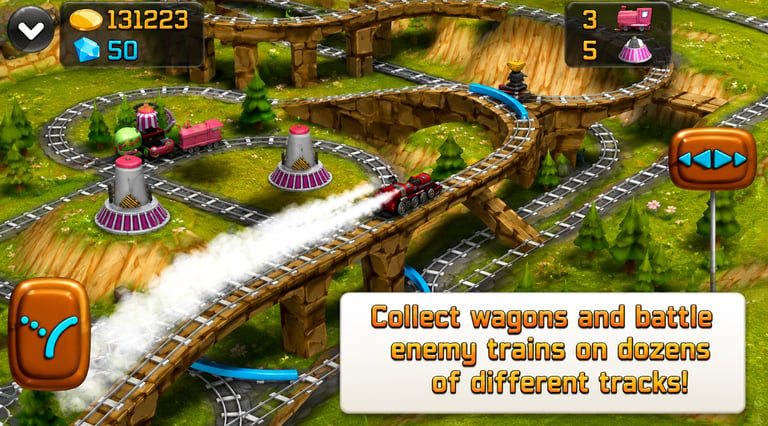
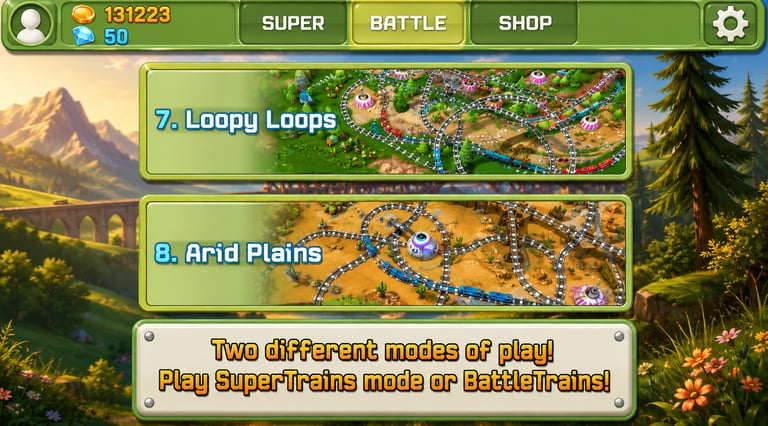
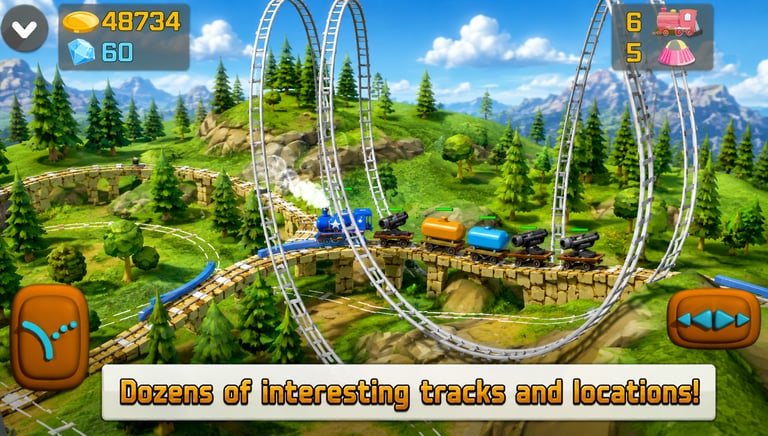
A major focus during development was creating track layouts that felt visually playful while also supporting dynamic movement, momentum, timing, and tactical positioning. The game features dozens of unique environments ranging from elevated loop systems and mountain passes to combat-oriented battle arenas and experimental track structures.
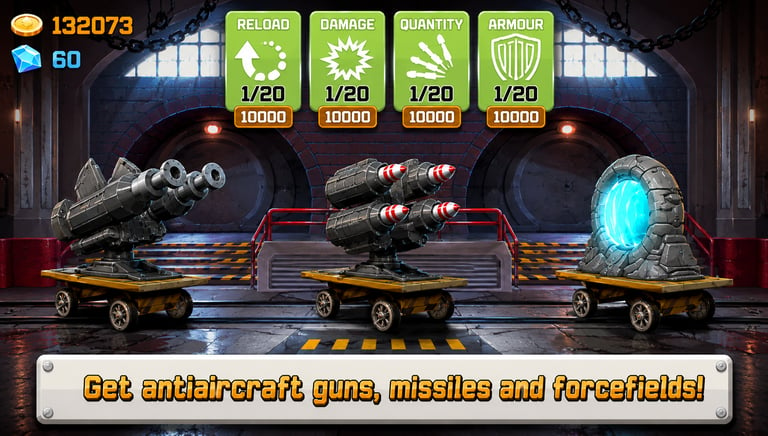
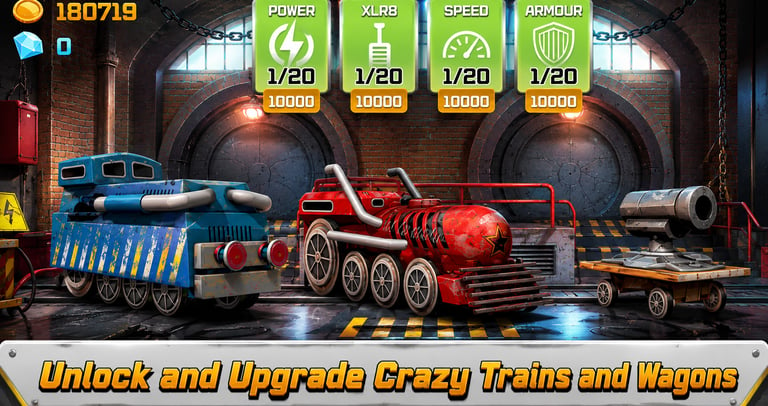
Beyond traditional train simulation, the project explored exaggerated arcade-style mechanics including weaponized wagons, defensive systems, enemy encounters, collectible upgrades, and unlockable train configurations. Progression systems were designed to encourage experimentation and long-term engagement through unlocks, upgrades, and increasingly elaborate train combinations.
Throughout development I continuously iterated on gameplay feel, readability, pacing, and mobile usability, balancing spectacle and accessibility with realtime responsiveness and technical performance across a wide range of devices.
The project also served as a platform for experimentation with additional gameplay directions including multiplayer prototypes, VR exploration using Oculus Rift, advanced customization systems, and large-scale interactive world concepts.
Technical Systems
SuperTrains evolved over many years into a highly modular realtime game framework combining physics systems, dynamic train management, procedural gameplay elements, combat mechanics, and large-scale track environments optimized for mobile hardware.
One of the core technical challenges involved managing long multi-wagon train configurations while maintaining stable movement, responsive controls, and readable gameplay across increasingly complex track layouts. This required continual iteration on train-following systems, wagon synchronization, collision handling, movement smoothing, and gameplay balancing.
The project incorporated a wide variety of interconnected gameplay systems including upgrade mechanics, unlockable content, enemy AI behaviors, weaponized wagons, environmental hazards, mission systems, collectibles, and realtime combat interactions. These systems were designed to remain extensible as the game expanded through multiple gameplay iterations and platform releases.
Significant focus was placed on optimization and scalability to support a broad range of mobile and desktop devices. Throughout development I continuously refined memory usage, rendering performance, object management, UI responsiveness, and gameplay simulation efficiency to maintain stable performance across multiple hardware generations.
As the sole developer, I designed and implemented the entire technical architecture including gameplay programming, UI systems, save systems, progression systems, monetization integration, input handling, audio implementation, effects systems, and platform deployment pipelines.
The project also served as an experimental sandbox for emerging technologies and gameplay concepts, including multiplayer prototypes, VR adaptations using Oculus Rift, advanced train customization systems, and expanded realtime simulation mechanics.
Long-term live development of the game required maintaining a flexible and sustainable codebase capable of supporting continual feature additions, visual updates, balancing changes, and platform-specific adaptations over many years of active iteration.
Art & Visual Direction
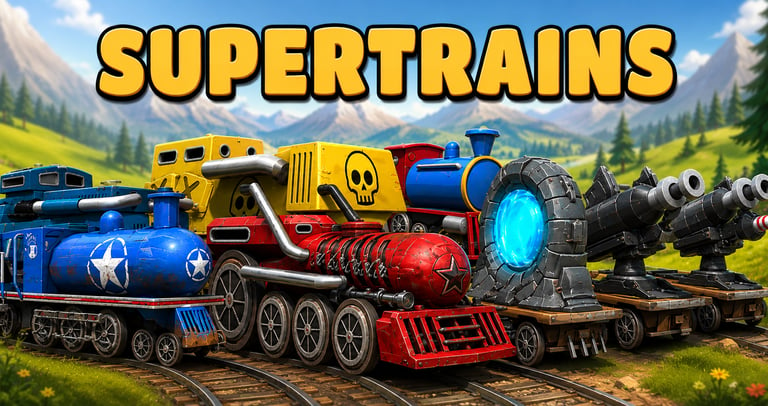
The visual direction of SuperTrains was developed around creating a colorful, playful, and highly readable world that balanced arcade-style spectacle with accessible gameplay clarity across a wide range of devices.
Rather than pursuing strict realism, the project embraced a stylized toy-like aesthetic inspired by miniature train sets, exaggerated physics, animated action gameplay, and bright interactive environments. Track layouts, environments, trains, and gameplay elements were designed to remain visually legible even during fast-paced movement, combat encounters, and complex multi-track sequences on smaller mobile screens.
A significant part of the project’s visual evolution involved continuously refining environmental variety, train silhouettes, effects readability, UI presentation, and gameplay feedback systems as the game expanded through multiple releases and platform generations.
The game’s environments explored a broad range of themes and moods including mountainous landscapes, elevated loop systems, industrial battle arenas, surreal track structures, and experimental combat-focused zones. Particular attention was given to creating visually distinctive track configurations that encouraged curiosity, exploration, and playful experimentation.
UI and upgrade systems were intentionally designed with bold shapes, strong color coding, and simplified iconography to maintain readability and responsiveness during gameplay while reinforcing the energetic arcade tone of the experience.
As the sole developer, I was responsible for the complete visual direction of the project including environment art, interface design, gameplay presentation, effects integration, lighting, promotional imagery, gameplay readability, and overall aesthetic cohesion across multiple hardware platforms and screen formats.
Throughout development the project continually evolved visually, incorporating new rendering techniques, environmental improvements, effects systems, gameplay feedback refinements, and expanded customization features while maintaining a cohesive and recognizable visual identity.







Contact
Feel free to reach out with questions or commissions
Phone
richard@okidoki-apps.com
+43 69911097929
© 2025. All rights reserved.